
 0
0
 0
0
Imagine checking your phone and seeing a notification: “Flash Sale: 1 Year of Premium Streaming for only $15!” In an era where major Over-The-Top (OTT) platforms like Netflix, Spotify, and Disney+ consistently raise their subscription prices, this kind of offer sounds incredibly tempting.
Unfortunately, the internet is flooded with cybercriminals, illegal account-sharing rings, and phishing operations disguised as official corporate marketing. These illicit operators peddle “Private Trades”—a transaction where you send money to an unverified individual in exchange for a shared profile slot on a stolen or illegally generated family account.
Falling for a private trade does not just mean losing your $15; it frequently results in stolen credit card data, hijacked email accounts, and permanent bans from the streaming platform. Protecting your digital identity requires dissecting the anatomy of these messages. By learning to identify the subtle differences between a legitimate corporate discount and a high-risk scam, you can spot the red flags instantly before your money is compromised.
Unmasking the sender: Verification badges vs. generic profiles
The very first layer of defense is the sender’s identity. Before you even read the contents of the promotional offer, you must audit the account that delivered it.
Legitimate OTT platforms operate with strict, sterile corporate professionalism. The Green Flag (Official Presence): Real promotional emails always originate from a highly specific, verifiable corporate domain (e.g., [email protected]). On social media, legitimate announcements come strictly from verified accounts possessing official brand logos and platform-issued checkmarks. Most importantly, true promotions are mirrored inside the official app; if you open your streaming app, the exact same discount will appear in your notification center.
Conversely, scammers rely on impersonation and chaotic distribution channels. The Red Flag (Private Trade): Unsolicited offers sent via Telegram groups, WhatsApp messages, or unverified X (Twitter) accounts are overwhelmingly fraudulent. Scammers frequently use generic stock photos or spoofed logos. For email communications, they employ deceptive domain typos designed to fool the eye at a quick glance – such as [email protected] (using a capital ‘I’ instead of a lowercase ‘l’). If the sender lacks a verified badge or the email domain looks unnecessarily complex, close the message immediately.
Decoding the language of urgency and payment demands
If a sender’s identity seems ambiguous, the text of the message itself will always reveal its true nature. The psychology of a scam relies heavily on panic and unconventional payment routing.
Artificial pressure tactics
Scammers know that if you stop to think, you will not buy. Therefore, they aggressively manufacture FOMO (Fear Of Missing Out). Private trade messages are littered with desperate, urgent phrasing such as, “Only 3 profile slots left!” or “Direct message me fast, offer expires in 10 minutes!”
This frantic tone starkly contrasts with official corporate marketing. A legitimate OTT service never begs for your money via direct message. Official promotions are calmly structured, legally compliant, and state clear, extended promotional windows (e.g., “Offer valid for returning subscribers until November 30. Terms and conditions apply.”).
The direct bank transfer trap
The ultimate, undeniable sign of a private trade is the payment mechanism. You must understand what a private trade actually is: you are not buying a legitimate subscription; you are paying a stranger to share a password to an account they likely acquired using stolen credit cards.
Because scammers cannot process payments through official platform gateways, they demand peer-to-peer transactions. If a message instructs you to pay via Venmo, Zelle, PayPal Friends & Family, direct wire transfer, or cryptocurrency, it is a 100% fraudulent operation. Official streaming platforms only process payments via their secure, internal billing gateways located directly on their official website or through certified app store ecosystems (Apple App Store / Google Play).
The link destination test and phishing mechanics
The most dangerous element of a fake promotional message is the hyperlink. Clicking a malicious link can install background malware or direct you to a perfectly cloned, fake login page designed to harvest your credentials.
To audit a URL without clicking it, use the hover technique. On a desktop computer, simply rest your mouse cursor over the “Claim Offer” button without clicking. A small tooltip will appear in the bottom corner of your browser revealing the true destination address. On a mobile device, long-press the link to preview the URL.
A legitimate link will direct you exclusively to the core domain (e.g., https://www.netflix.com/). A malicious link will reveal a chaotic structure: URL shorteners (bit.ly/cheap-subs), bizarre domain extensions (.xyz, .top), or convoluted subdomains (netflix-promo.secure-login-portal.com).
The ultimate fail-safe rule for digital consumers is to never click a link inside a promotional message. If you receive an email claiming you have won a 50% discount on Disney+, delete the email, open your web browser, manually type in the official web address, and log in. If the promotion is real, the discount will be waiting for you securely inside your account dashboard.
Emergency protocols for compromised accounts
In a moment of vulnerability, anyone can fall for a well-crafted phishing message. If you realize you have interacted with a private trade scam, executing an immediate incident response protocol minimizes the damage.
First, do not reply to the sender asking for a refund or more details. Replying merely confirms to the scam network that your contact information is active, guaranteeing you will be targeted by future spam campaigns. Block the account and report the message to the host platform.
If you clicked a malicious link but did not type anything, immediately close the browser tab. While the risk is low, run a quick anti-malware scan on your device just to be safe.
However, if you clicked the link and entered your login credentials or credit card numbers into the fake website, you must act with extreme urgency:
- Change passwords: Navigate to the official OTT website directly and change your password immediately. If you use that same password for your email or banking apps, change those as well.
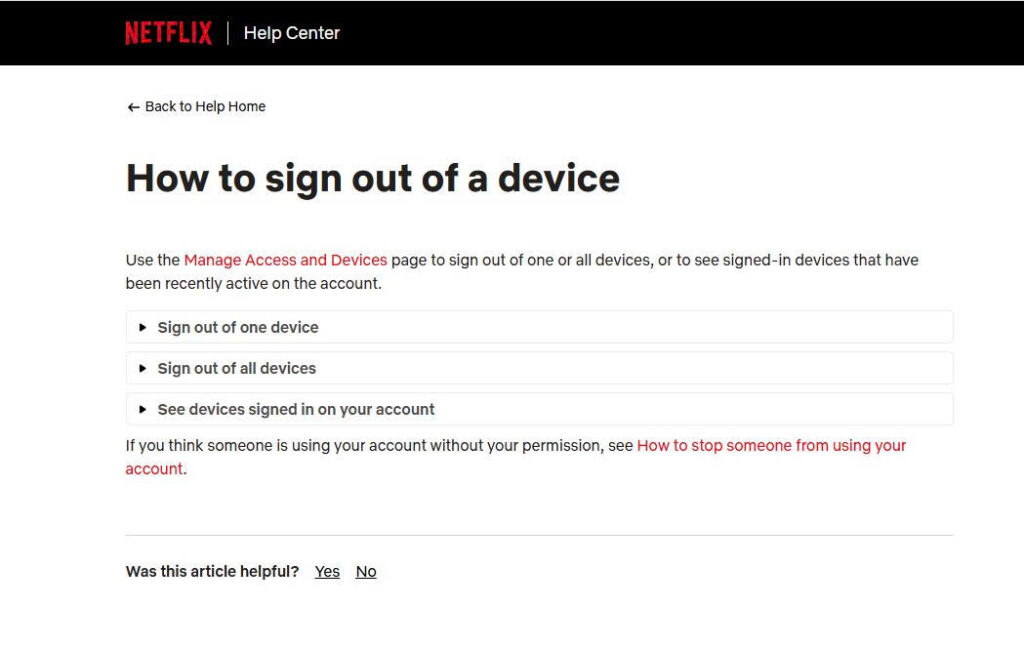
- Force sign-out: Use the streaming platform’s account settings to select “Sign out of all devices,” instantly kicking the scammers out of your profile.
- Enable 2FA: Activate Two-Factor Authentication to add a permanent layer of security against stolen passwords.
- Monitor finances: Contact your bank or credit card issuer, notify them that your card details may have been compromised on a phishing site, and monitor your statements for unauthorized charges.


